

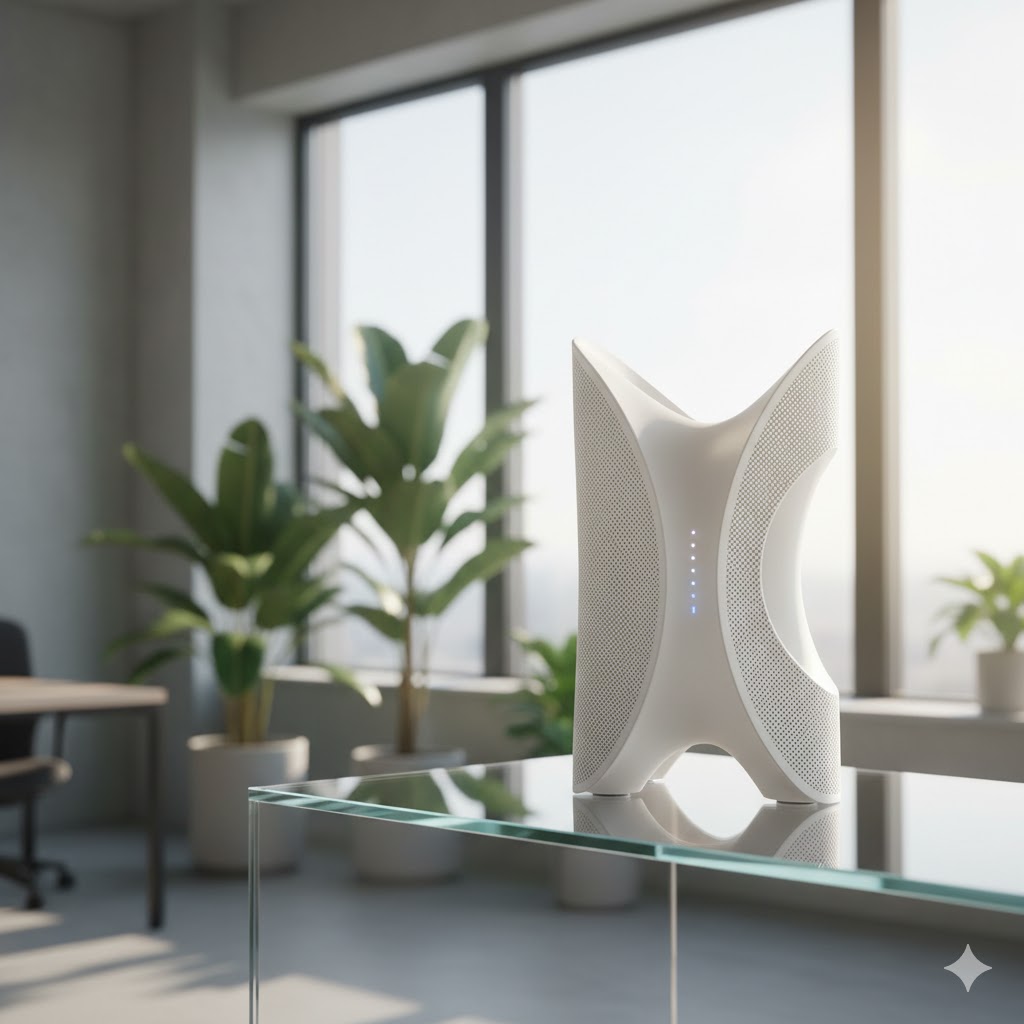
[Editor’s Choice – Infrastructure Excellence] Transparency Note: Running a media agency requires moving terabytes of data across our local network and maintaining 99.9% uptime for our ad-tech clusters. We upgraded our entire headquarters to a Wi-Fi 7 Mesh system to eliminate the last remaining friction point in our workflow.
Introduction: The Bottleneck in Your Walls
In the early 2020s, “fast internet” was defined by your ISP’s download speed. By 2026, the definition has changed. With the rise of 100TB Private Clouds and real-time Agentic Workflows, the speed of your local network (the air between your devices and your router) has become the most critical metric for productivity.
If you are still operating on a Wi-Fi 6 or 6E system, you are essentially driving a Ferrari on a gravel road. The Editor’s Choice for this quarter is focused on Wi-Fi 7—a protocol that doesn’t just increase speed, but fundamentally changes how data is routed through your “Intelligent Sanctuary.”
1. Multi-Link Operation (MLO): Ending the Congestion
The most significant breakthrough in Wi-Fi 7 is Multi-Link Operation (MLO). In previous generations, your device could only talk to the router on one frequency band at a time—either 2.4GHz, 5GHz, or 6GHz.
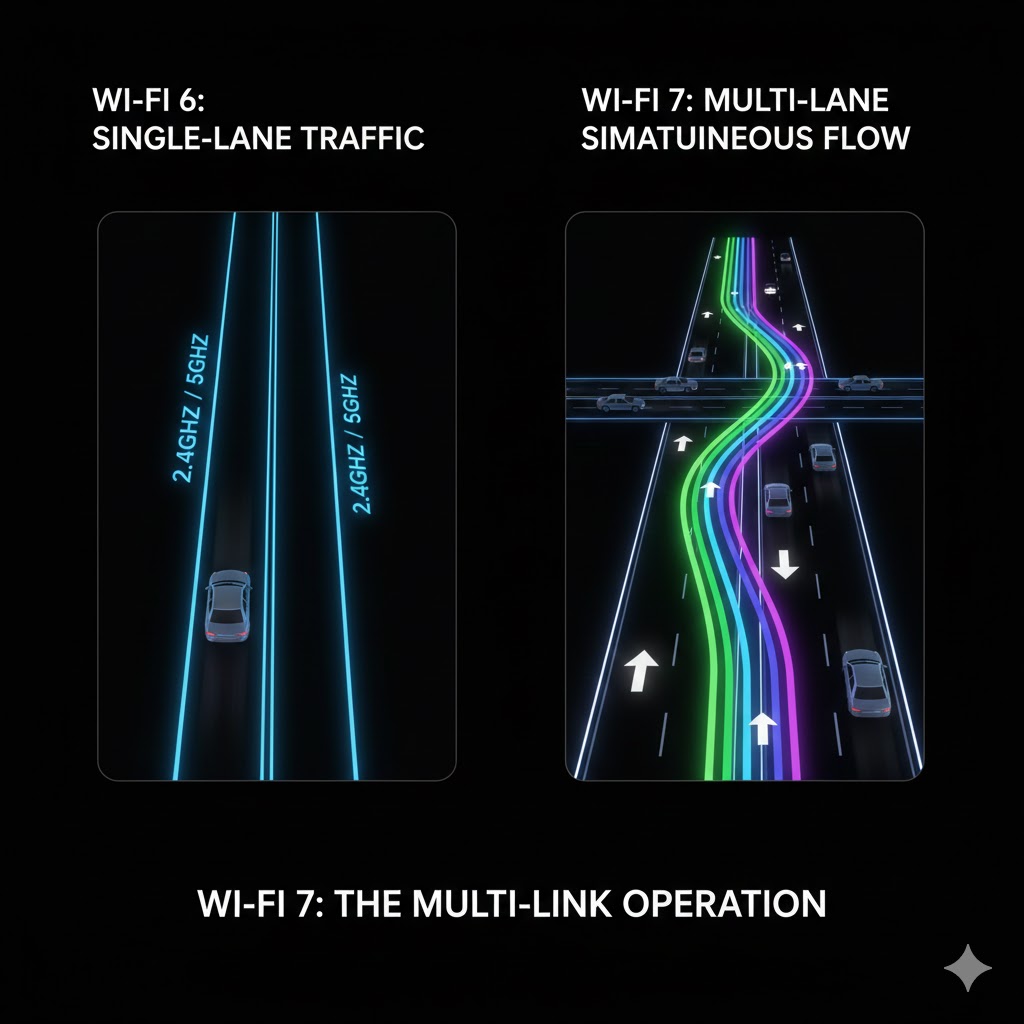
- Simultaneous Transmission: With MLO, a Wi-Fi 7 device can aggregate bandwidth across multiple bands simultaneously. This effectively doubles your potential throughput and reduces latency to near-zero.
- Interference Evasion: If a neighbor’s microwave or a legacy device causes interference on one band, Wi-Fi 7 seamlessly shifts the data flow to another without dropping a single packet. For our Facebook Ads management team, this ensures that high-stakes campaign launches are never interrupted by local network glitches.
2. 320MHz Channels: The 8K Pipe
Wi-Fi 7 doubles the channel width from 160MHz to 320MHz. Imagine widening a highway from two lanes to four. This is essential for:
- 8K Content Pipelines: Moving uncompressed video from our workstations to our Private NAS now happens at speeds exceeding 5Gbps over the air.
- Edge Computing: As we discussed in our report on Edge Computing, local data processing requires massive, low-latency bandwidth to keep local AI models responsive.
3. The Mesh Advantage: Unified Coverage
For a modern living space, a single router is rarely enough. We recommend a Tri-Band Mesh system utilizing Wi-Fi 7. By using the 6GHz band as a dedicated “backhaul” between nodes, we’ve achieved a seamless 2.5Gbps connection in every corner of our 3,000 sq ft facility. Whether we are in the “Focus Sanctuary” or the “Digital Kitchen,” our connection remains tethered to the core of our infrastructure.
Conclusion: Investing in the Invisible
Infrastructure is often the last thing professionals invest in because they can’t see it. But in 2026, your network is the nervous system of your digital life. Upgrading to a Wi-Fi 7 ecosystem (an investment typically ranging from $800 to $1,500) is a commitment to a Zero-Friction future. At Shape Digital Media, we believe that the invisible backbone of your office should be as powerful as the creatives who use it.
