

[Infrastructure Deep Dive] Transparency Note: Shape Digital Media’s engineering team analyzes the physical infrastructure that powers the digital economy. From fiber optics to server nodes, we look at what makes the internet tick.
Introduction
For the past decade, “The Cloud” has been the answer to everything. But in 2026, with billions of IoT sensors and autonomous systems requiring millisecond reaction times, the Cloud is becoming too slow. The speed of light is fast, but it’s not infinite.
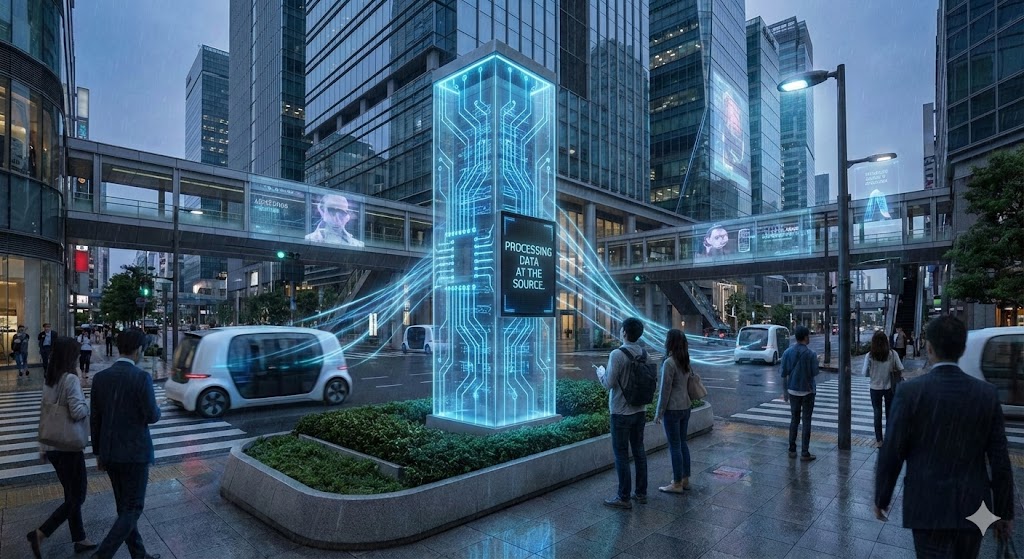
At Shape Digital, we are observing a massive architectural shift: moving the “brain” of the internet closer to the “hands.” This is the era of Edge Computing.
1. The Latency Bottleneck
When a self-driving car sees a pedestrian, it cannot afford the 100ms round-trip time to send that image to a data center in Virginia and wait for a decision. It needs to process that data locally, within 5ms.
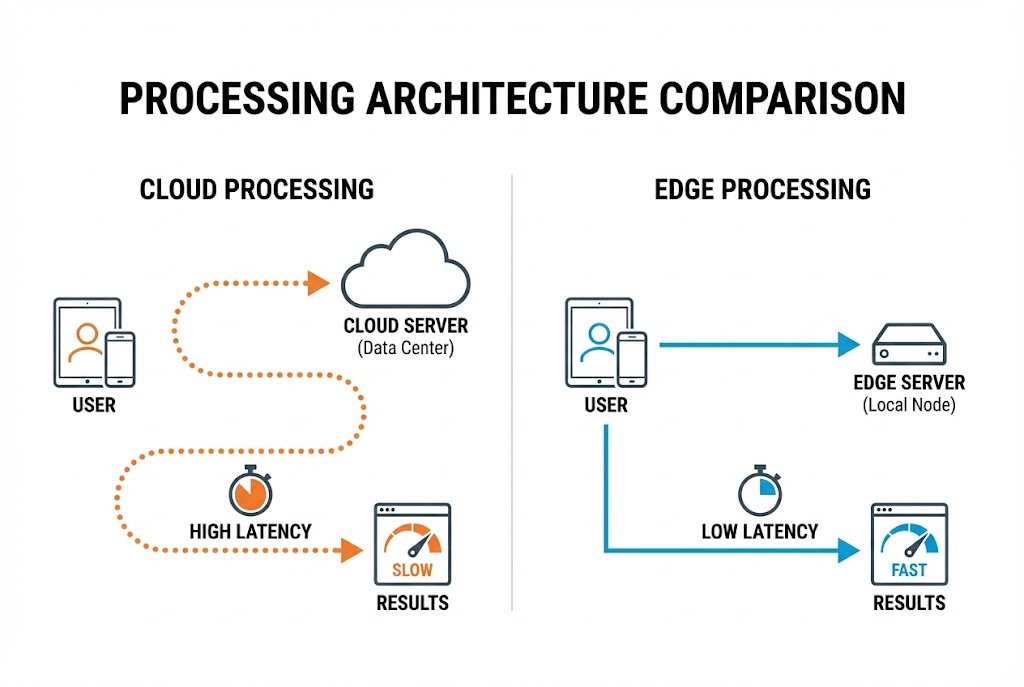
This necessity is driving the deployment of “Micro-Data Centers” at the base of 5G towers. For our readers involved in High-Frequency Trading or Real-Time Ad Bidding, understanding this geographical shift is crucial for optimizing performance.
2. Bandwidth Economics
It is simply too expensive to stream 8K video from thousands of security cameras to the cloud 24/7. Edge computing filters this data locally, sending only the “events” (like a break-in) to the central server. This “Filter First, Send Later” approach is saving enterprises millions in bandwidth costs.
Conclusion: The Hybrid Future
The Cloud isn’t dying; it’s evolving into a tiered hierarchy. Deep storage and heavy AI training happen in the Core; instant inference and reaction happen at the Edge. For the tech-savvy investor, the next big opportunity isn’t in big data centers, but in the millions of small nodes surrounding us.
